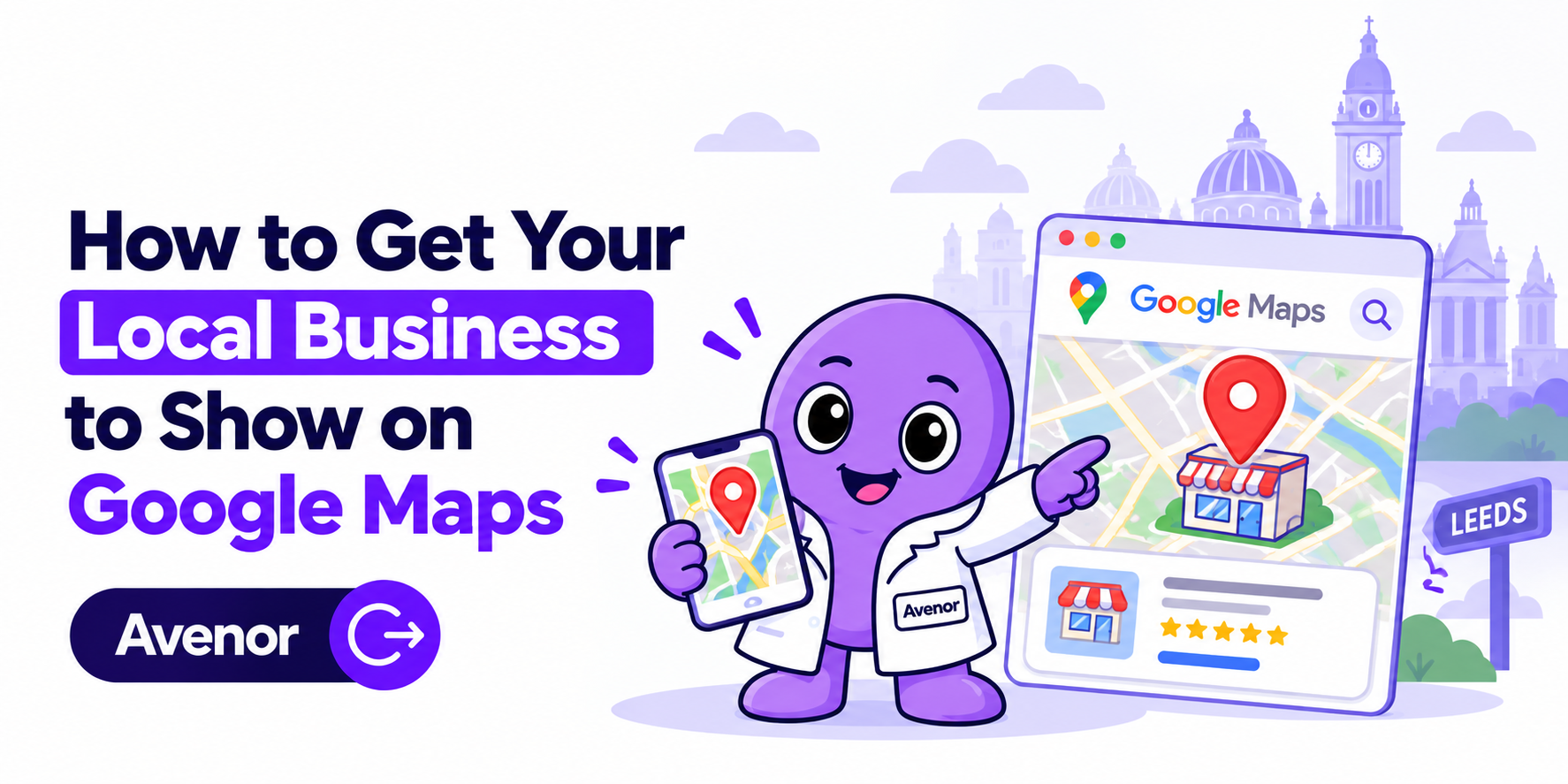
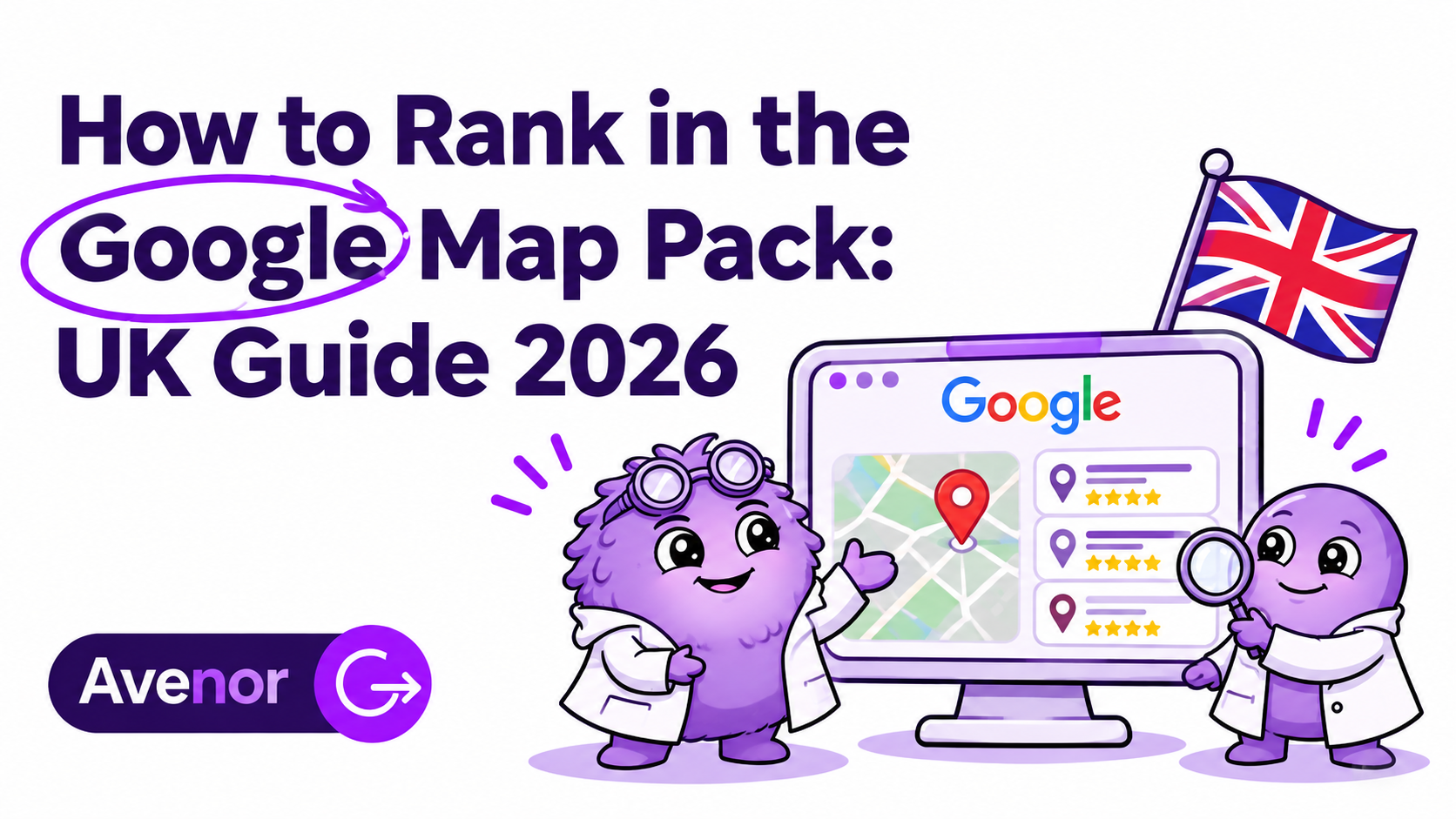
When someone searches for an electrician in Birmingham, a plumber in Leeds or a commercial cleaning company in Manchester, Google often displays a map with a small selection of local businesses near the top of the results.
This is known as the Google Map Pack, also called the Local Pack. For local service businesses, appearing here can put your company in front of people who are actively looking for a service. However, getting into these results is not simply a case of adding keywords to your website or collecting as many reviews as possible. Google considers how relevant a business is to the search, how close it is to the searcher and how prominent it is online. These are the three main factors outlined in Google's official local ranking guidance.
If you want to improve your local visibility in 2026, the focus should be on building a complete and accurate Google Business Profile, strengthening your website, earning genuine reviews and developing a consistent local SEO strategy.
What Is the Google Map Pack?
The Google Map Pack is the group of local business listings that can appear alongside a map within Google Search. It commonly displays three prominent businesses, although the layout can vary depending on the query, device and search results page. Each listing can show information such as the business name, rating, opening hours, location, contact details and links to its website or directions.
For a local service business, this visibility can be valuable because people searching for terms such as "emergency plumber near me" or "commercial cleaners in Nottingham" may already be looking for a provider. The Map Pack is different from the standard organic results below it. Your website's organic ranking and your Google Business Profile's local ranking are related parts of a wider search strategy, but they are not identical.
A business can have a well-designed website and still struggle to appear prominently in local results if its Business Profile is incomplete, its local relevance is unclear or competing businesses have stronger prominence signals.
How Does Google Rank Businesses in the Map Pack?
Google identifies three main factors that influence local rankings: relevance, distance and prominence. https://support.google.com/business/answer/7091" title="Google's official guidance on local rankings"/> explains these factors in more detail.
1. Relevance
Relevance refers to how well your business matches what someone is searching for. For example, a business with a correctly categorised and detailed profile explaining its electrical services may be more relevant to a search for an electrician than a business whose profile provides little information about its work.
You can improve relevance by selecting the most appropriate primary business category, completing your profile accurately and describing the services you genuinely provide.
2. Distance
Distance refers to how far your business is from the searcher or the location mentioned in the search. This is particularly important for local services. A company based in Southampton may find it easier to appear for nearby searches than for someone searching from a distant part of the UK.
You cannot directly control a searcher's location or guarantee visibility across an entire city. Focus instead on accurately representing your business location and genuine service area.
3. Prominence
Prominence relates to how well known and established your business appears to be. Google identifies signals such as links from other websites and customer reviews as relevant examples. Building prominence takes time. Genuine reviews, relevant local links, a credible website and consistent business information can all contribute to a stronger overall online presence.
These three factors work together. Improving one area does not guarantee a top-three position, particularly in competitive markets.
7 Steps to Rank Higher in the Google Map Pack
1. Optimise Your Google Business Profile
Your Google Business Profile is one of the most important starting points for local search visibility. First, claim and verify your profile if you have not already done so. Then check that your business information is complete and accurate.
Pay particular attention to:
Your real business name.
The most appropriate primary category and relevant additional categories.
Your address or service area, depending on your business model.
Your phone number and website.
Opening hours and special holiday hours.
The services you actually offer.
Relevant business attributes and photographs.
Choose categories that accurately describe your business rather than adding categories simply because they contain valuable keywords.
For example, a roofing company should select the most suitable category available for its actual business. It should not attempt to cover unrelated trades just to appear for more searches. Also, avoid adding phrases such as "best plumber in London" to your business name unless they genuinely form part of your real-world business name. Misrepresenting your business details can put your profile at risk.
2. Choose the Right Primary Category
Your primary category helps Google understand the main type of business you operate. This decision deserves attention because selecting an overly broad or inaccurate category may make it harder for your profile to match the searches that matter to your business.
Start by reviewing the available categories and identifying the one that most accurately represents your core service. Add other categories only when they describe genuine additional business activities. A company that mainly provides commercial cleaning should not select a category that represents an unrelated service simply because it appears popular.
Review your category selection when your business changes, but avoid repeatedly switching categories without a clear reason.
3. Build a Consistent Flow of Genuine Google Reviews
Reviews help potential customers assess whether your business is trustworthy. Google also identifies review quantity and positive ratings as factors that can influence local ranking.
However, the goal should not be to collect reviews through shortcuts. Focus on building a straightforward process for asking real customers to share honest feedback after a genuine service experience.
You can improve your review process by:
Asking customers for feedback after completing a job.
Sending a direct link to your Google review page.
Making the request polite and simple.
Responding professionally to positive and negative reviews.
Reviewing feedback to identify areas where your service can improve.
Avoid buying reviews, creating fake accounts or offering incentives in exchange for positive ratings. These practices can undermine trust and breach Google's review policies. You do not need every review to contain a specific keyword. Encourage honest feedback in customers' own words rather than scripting their responses.
4. Create Dedicated Website Pages for Your Services
Your Google Business Profile is only one part of your local SEO strategy. Your website should also explain your services clearly. Suppose you run an electrical business that offers emergency repairs, consumer unit upgrades and commercial electrical installations. Putting all three services on one short page may leave customers without the detail they need.
Creating useful, dedicated pages for your main services can help you explain what each service involves, who it is suitable for, which areas you cover and how customers can enquire.
For example, your website could include:
Emergency electrician services.
Electrical installation and upgrades.
Commercial electrical services.
Electrical inspection and testing.
Each page should provide genuinely useful information rather than repeating the same content with a different town name.
A strong service-page strategy also supports wider organic visibility. Explore Avenor's SEO guide for construction companies in the UK for an example of how service-focused content can support a local business's search strategy.
5. Strengthen Your Local Website Signals
Your website should make it clear where your business operates and which customers it serves. This does not mean adding a list of every UK town to every page. Instead, build a sensible structure around your genuine service areas and the services you want to promote.
Useful improvements may include:
Including your business contact details consistently.
Creating location pages where there is a genuine reason to serve each area.
Linking relevant service pages to appropriate location pages.
Adding real project examples from your service areas.
Ensuring your website works well on mobile devices.
Checking for broken links, indexing problems and slow-loading pages.
For example, a commercial cleaning company serving Birmingham and Coventry may benefit from useful location pages that explain its coverage and the types of premises it cleans. Avoid creating dozens of near-identical pages that only change the location name. Thin, repetitive pages provide little value to customers and are not a reliable way to improve rankings.
6. Build Local Authority Through Relevant Links and Mentions
Google identifies links to a business's website as one example of a signal associated with prominence. For local businesses, relevant links and mentions can come from legitimate business relationships and useful local resources.
Depending on your industry, opportunities may include trade associations, professional bodies, local business organisations, suppliers, community initiatives and genuine partnerships. The emphasis should be on relevance and credibility, not the number of links acquired. Local link building should support a broader SEO strategy, not replace useful website content or a properly maintained Business Profile.
7. Keep Your Profile and Website Up to Date
A complete profile is a good starting point, but local SEO also requires ongoing attention to accuracy and customer experience. Update opening hours when they change, add genuine photographs that help customers understand your business and make sure your services reflect what you currently offer. Google Business Profile posts can be useful for sharing announcements, seasonal updates and offers where appropriate. However, do not assume that publishing a certain number of posts automatically improves rankings.
The priority is to keep information useful and accurate while making it easy for customers to contact you. For a wider view of how local search fits into your marketing, explore Avenor's SEO and Google Ads services and consider how organic visibility and paid search can work together.
Common Mistakes That Can Hurt Local SEO
Businesses sometimes spend time on tactics that look like SEO but do not address the underlying reasons they struggle to rank.
Here are some common mistakes to avoid.
Adding keywords to your business name: Your profile name should reflect your real-world business name, not a list of search terms.
Creating fake or incentivised reviews: Reviews should reflect genuine customer experiences. Do not buy them or manipulate their content.
Using an incorrect business address: Do not use a virtual office or an address where your business is not genuinely eligible to operate as a listed location.
Creating duplicate profiles: Multiple profiles for the same business at the same location can create confusion and may breach Google's guidelines.
Publishing thin location pages: Pages should offer useful, distinct information rather than repeating the same copy for every town.
Ignoring the website: A Business Profile is important, but your website still needs relevant service information, accessible pages and clear contact options.
Expecting immediate results: Local visibility depends on several factors, including competition and distance. Changes may take time to influence performance, and no provider can guarantee a particular Map Pack position.
How to Track Your Google Map Pack Performance
A local SEO campaign should be measured against business objectives, not rankings alone. Start by establishing a baseline before making significant changes. Then review performance regularly to understand whether your work is improving visibility and attracting potential customers.
Useful metrics include:
Google Business Profile performance: available searches, views and customer interactions.
Calls and website visits: actions that indicate interest in your business.
Direction requests: relevant for businesses customers visit in person.
Local keyword visibility: how your business appears for important searches across target areas.
Website enquiries: calls, form submissions and other tracked conversions.
Lead quality: whether enquiries match your services, locations and commercial goals.
Remember that rankings can vary depending on where a search takes place. A business may appear prominently close to its premises but lower down in a different part of the same city. Use consistent tracking methods and compare results over time rather than judging your progress from a single search on your own phone.
How Long Does It Take to Rank in the Google Map Pack?
There is no fixed timeframe for entering the Map Pack.
Some businesses may notice improvements after correcting incomplete profile information or resolving technical issues. Others may face stronger competition, limited local prominence or a location that makes it difficult to rank across a wide area. Your starting point, business category, location, competitors, website quality and reputation all influence the work required.
Rather than promising a first-page position within a set number of days, a practical local SEO plan should prioritise the most important issues, implement improvements and measure the results. The first goal may be to improve visibility for a small number of commercially valuable services in your immediate area. Once those foundations are stronger, you can assess whether expanding into additional locations is realistic.
Need Help Improving Your Google Map Pack Visibility?
If your business is not appearing for the local searches that matter, the answer may not be to publish more content or collect reviews without a plan. You need to understand how your Google Business Profile, website, local relevance and online reputation work together.
Avenor helps businesses develop search strategies focused on visibility, qualified enquiries and measurable commercial outcomes. Depending on your needs, this may include local SEO, service-page optimisation, technical improvements and paid search through our Google Ads and PPC services.
You can also explore our case studies to learn more about our work across different businesses and sectors.
Want to find out what is holding your local rankings back? Get in touch with Avenor to discuss your website, target locations and the practical steps that could improve your search visibility.