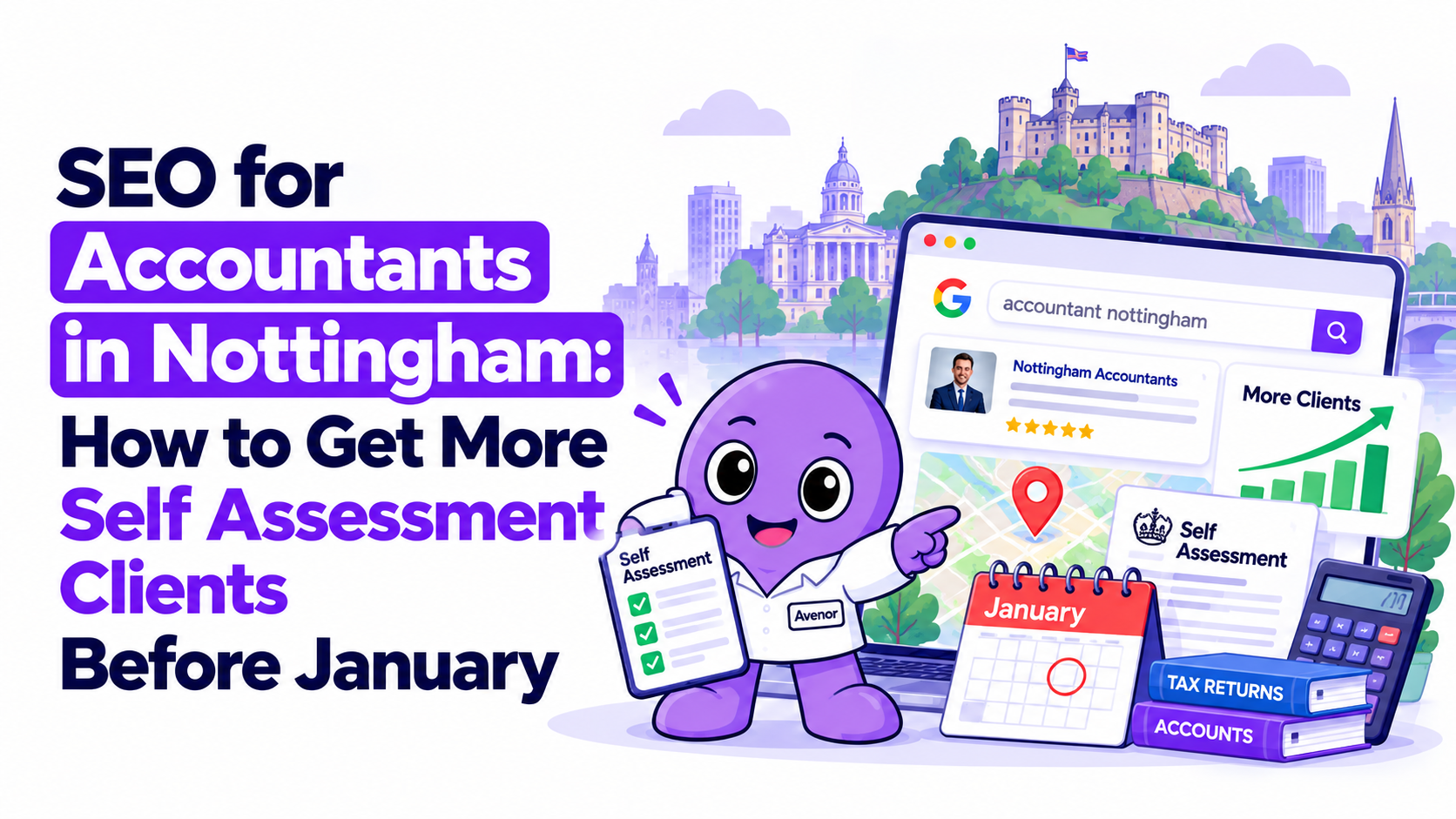
SEO for Accountants in Nottingham
October is a good time for accountancy firms to look at where their next wave of clients will come from. The Self Assessment deadline is approaching, sole traders are getting their records together, and landlords and freelancers may be looking for help with their tax returns. But when someone searches Google for an accountant in Nottingham, will they find your firm or a competitor?
For many accountancy practices, recommendations and existing clients provide a steady flow of work. The challenge comes when you want to attract new clients without relying entirely on referrals or last-minute enquiries. This is where SEO for accountants in Nottingham can make a difference. A focused search strategy helps your firm appear when people are actively looking for accounting services. It can also make it easier for potential clients to understand what you offer, where you work and how to get in touch.
At Avenor, we help service businesses use Google to attract relevant enquiries. For accountants, the opportunity is to connect local search visibility with the services people need most, particularly in the run-up to the Self Assessment deadline.
Why October Matters for Accountants
The online filing deadline for the 2025 to 2026 tax year is 31 January 2027. Paper tax returns have an earlier deadline of 31 October 2026. People who need to register for Self Assessment for the first time generally need to notify HMRC by 5 October, although specific circumstances can affect the process. HMRC’s Self Assessment guidance explains the relevant deadlines.
As January 2027 approaches, people may search for help with tax returns, allowable expenses, bookkeeping and tax calculations. Some will already have an accountant. Others may be self-employed for the first time, have started renting out a property or simply want professional support with their return.
If your website is difficult to find, these potential clients may never discover your firm.\ SEO takes time, so October is not a reason to expect overnight rankings. It is, however, a sensible point to improve your website, target relevant searches and prepare for seasonal demand. The work can also support visibility beyond January, when firms may want to attract ongoing bookkeeping, payroll and tax advisory clients.
1. Target the Searches Your Potential Clients Use
One of the first steps in accountant SEO is understanding how people search for services. Not everyone types “accountant” into Google. Some searches describe a location, while others reveal a specific need.
For example, potential clients may search for:
Accountants in Nottingham
Self Assessment accountant Nottingham
Tax return accountant
Accountant for self-employed people
Bookkeeping services Nottingham
Small business accountant Nottingham
These searches have different levels of intent. Someone looking for general tax information may not be ready to hire anyone. A person searching for a local accountant to complete their tax return is more likely to be comparing providers. Your website should reflect those differences. Use your main service page to explain your accountancy offering, then create dedicated pages for important services where there is enough demand and genuinely different information to provide.
Avoid creating dozens of near-identical pages that simply replace Nottingham with nearby town names. Each page should have a clear purpose and provide useful, location-relevant information.
For a wider view of local search strategy, read our page on SEO services for businesses.
2. Build a Strong Local SEO Foundation
When someone searches for an accountant nearby, Google may show local business listings alongside ordinary website results. Your firm needs accurate business information and a clear local presence to compete for these searches. Start with your Google Business Profile. Make sure your business name, address, telephone number, opening hours and website are correct. Select the most appropriate primary category and add relevant secondary categories where they genuinely describe your services.
Your profile should also explain the services you provide. If you offer Self Assessment support, bookkeeping, payroll or business accounts, make those services clear rather than relying on a generic business description.
Reviews matter to potential clients because choosing an accountant involves trust. Ask satisfied clients for honest feedback without pressuring them to leave a particular rating. Respond professionally to reviews and avoid sharing confidential client information in your replies. Your website should reinforce the same local signals. Include Nottingham naturally in relevant page titles, headings and copy, but do not force the city name into every sentence.
For more detail on the local approach, see Avenor’s SEO agency in Nottingham.
3. Create a Page for Self Assessment Services
If your firm wants more tax return clients, do not make visitors hunt through a general accountancy page to find out whether you can help them. A dedicated Self Assessment page can explain who you work with, what the service includes, what information clients need to provide and how the process works. You can also clarify whether you support sole traders, landlords, freelancers, company directors or other relevant client groups.
Answer practical questions clearly. Do you help clients organise their records? Can they ask about allowable expenses? What happens after they submit an enquiry? How should they prepare for an initial conversation? Only describe services your firm actually provides. If you publish pricing, explain what is included and whether fees vary with the complexity of a return. Clear expectations can reduce unsuitable enquiries and help prospective clients decide whether to contact you.
Include a visible call to action, such as requesting a consultation or enquiring about Self Assessment support. Make the telephone number easy to find on mobile devices, since some visitors will prefer to call rather than complete a form.
4. Publish Useful Content Before the January Deadline
A blog can help your firm appear for questions potential clients ask before they decide to hire an accountant. However, publishing content just to increase the number of pages on your website is unlikely to be an effective strategy. Choose subjects that connect genuine client questions with your services. Useful topics might include:
What documents do you need for a Self Assessment tax return?
When is the Self Assessment deadline for 2027?
What expenses can a sole trader claim?
Do landlords need to complete a Self Assessment tax return?
When should a self-employed person hire an accountant?
Keep tax information accurate and check it against current HMRC guidance. Dates, thresholds and rules can change, so include the relevant tax year and update articles when necessary.
Each article should answer its main question without making readers work through unnecessary background information. Where appropriate, link to your Self Assessment service page and explain how readers can get professional help with their own circumstances.
This is also where internal linking becomes valuable. Supporting articles can direct relevant visitors towards your service pages, while service pages can link back to useful guides. For inspiration on building content around a commercial topic, explore our SEO guide for construction companies in the UK.
5. Make Your Website Turn Visitors into Enquiries
Getting visitors to your website is only part of the job. If people cannot understand your services or find a straightforward way to contact you, better rankings may not translate into more clients. Review your website from a prospective client’s point of view. Is it immediately clear that you help with Self Assessment? Can visitors see whether you work with individuals, landlords or businesses? Is your telephone number visible without scrolling through several sections?
Your service pages should answer the questions people are likely to have before making contact. Explain what you do, who you help, what information you need and what the next step involves. Trust is particularly important when dealing with financial information. Use accurate business details, professional staff profiles where appropriate, genuine testimonials and clear privacy information. Never publish confidential client details or imply qualifications that your firm does not hold.
Also check mobile usability and loading speed. A page that works well on a desktop but is difficult to navigate on a phone can lose enquiries from people searching while travelling or during a break.
Avenor’s case studies show why visibility and conversion performance should be considered together. More traffic is useful when it brings the right visitors and gives them a clear path towards taking action.
6. Track the Results That Matter to Your Firm
SEO reporting should go beyond counting how many keywords appear in Google’s results. Rankings and organic traffic help explain performance, but they do not tell you whether your marketing is generating suitable clients. Track organic enquiries, telephone calls where measurable, consultation requests and the number of enquiries that become paying clients. Separate Self Assessment enquiries from other services if you want to understand the impact of your seasonal campaign.
Google Search Console can help you identify the searches that generate impressions and clicks. Website analytics and enquiry tracking can then help you understand what visitors do after arriving on your site..
Set realistic expectations. SEO is not an instant replacement for referrals or other marketing channels, and competitive searches may take time to improve. If you need immediate visibility while organic rankings develop, paid search may be worth considering alongside SEO. Our guide to Google Ads costs in the UK explains the main factors that affect campaign budgets.
You can also compare the strengths of each channel in our article on SEO vs Google Ads for small businesses.
7. Build Visibility Beyond the January Rush
Self Assessment can be a useful seasonal entry point, but your marketing should not stop when the deadline passes. Many clients need regular bookkeeping, payroll, VAT support, year-end accounts or ongoing tax advice. Build your website around the services that support your longer-term business goals. Give each important service a clear page, connect related content through internal links and make sure your website reflects the types of clients you want to attract.
You can also strengthen your wider marketing knowledge by reading our guide on choosing an SEO agency in the UK. It explains what to look for when assessing an SEO provider and how to avoid focusing on rankings alone.
For accountancy firms in Nottingham, the goal is not to appear for every possible search. It is to become easier to find for the services you offer, provide useful answers and make the next step clear for the right people.
Get More Relevant Enquiries from Google
If your accountancy firm relies heavily on referrals, a focused SEO strategy can help you build another route to potential clients. Start with your local presence, improve your Self Assessment service page, publish useful content and track whether the work produces genuine enquiries. The January deadline creates a clear seasonal reason to act, but the strongest results come from building a website that continues to support your firm throughout the year.
At Avenor, we focus on helping service businesses turn Google visibility into measurable business opportunities. If you want to understand where your website is losing potential enquiries, get in touch with Avenor to discuss your current position and the improvements worth prioritising.